Keep the Quran you have memorised.
A few quiet minutes of revision a day. Recite from memory, reveal, say how it went, and each ayah comes back on its own day.
For iPhone. No ads. No account needed to start.
تَبَٰرَكَٱلَّذِى12
Recite the rest from memory, aloud or under your breath.
One revision, start to finish.
Silent practice is fine. If you choose to record a verse for self-listening, it stays on your device and Durra does not upload it.
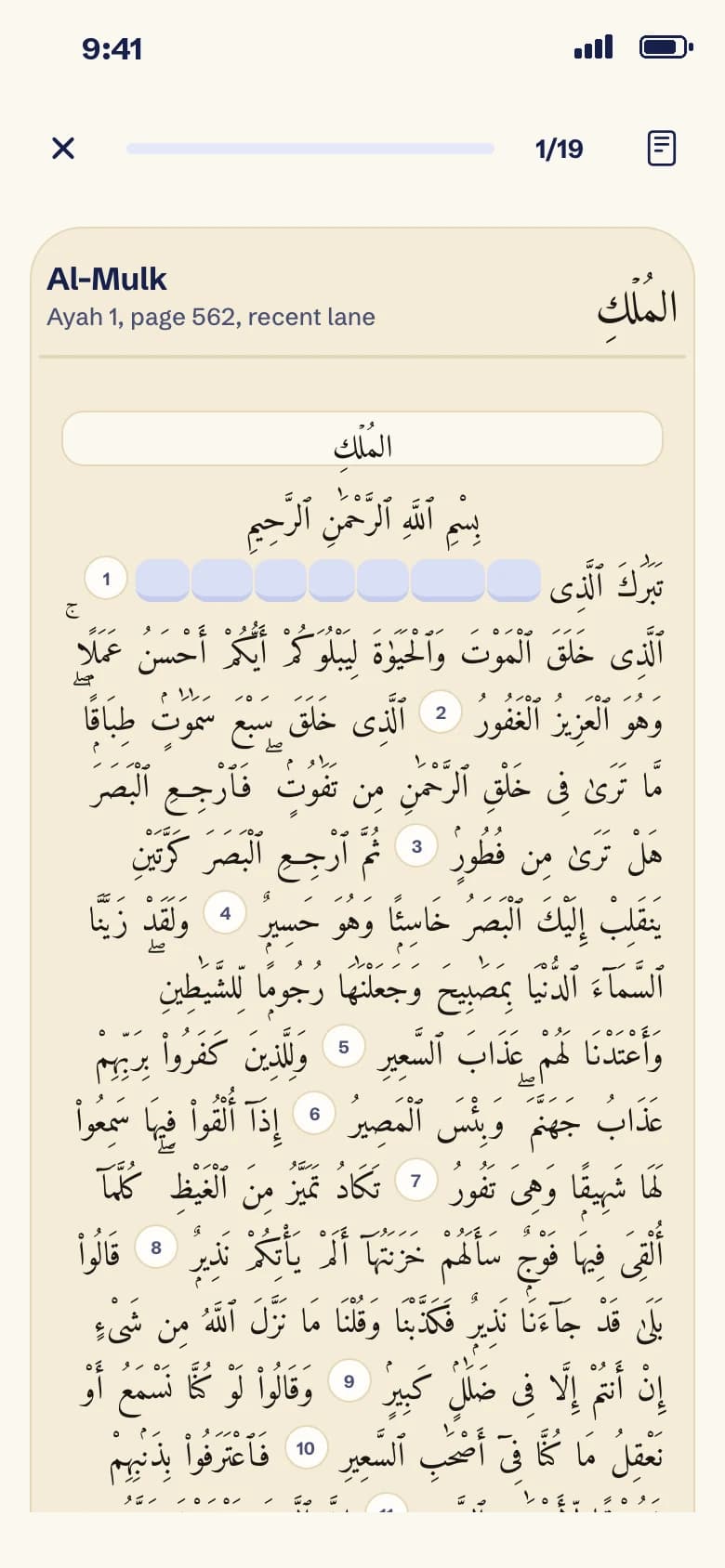
Recall it
The ayah is veiled. The first two words are your cue. Recite the rest from memory.
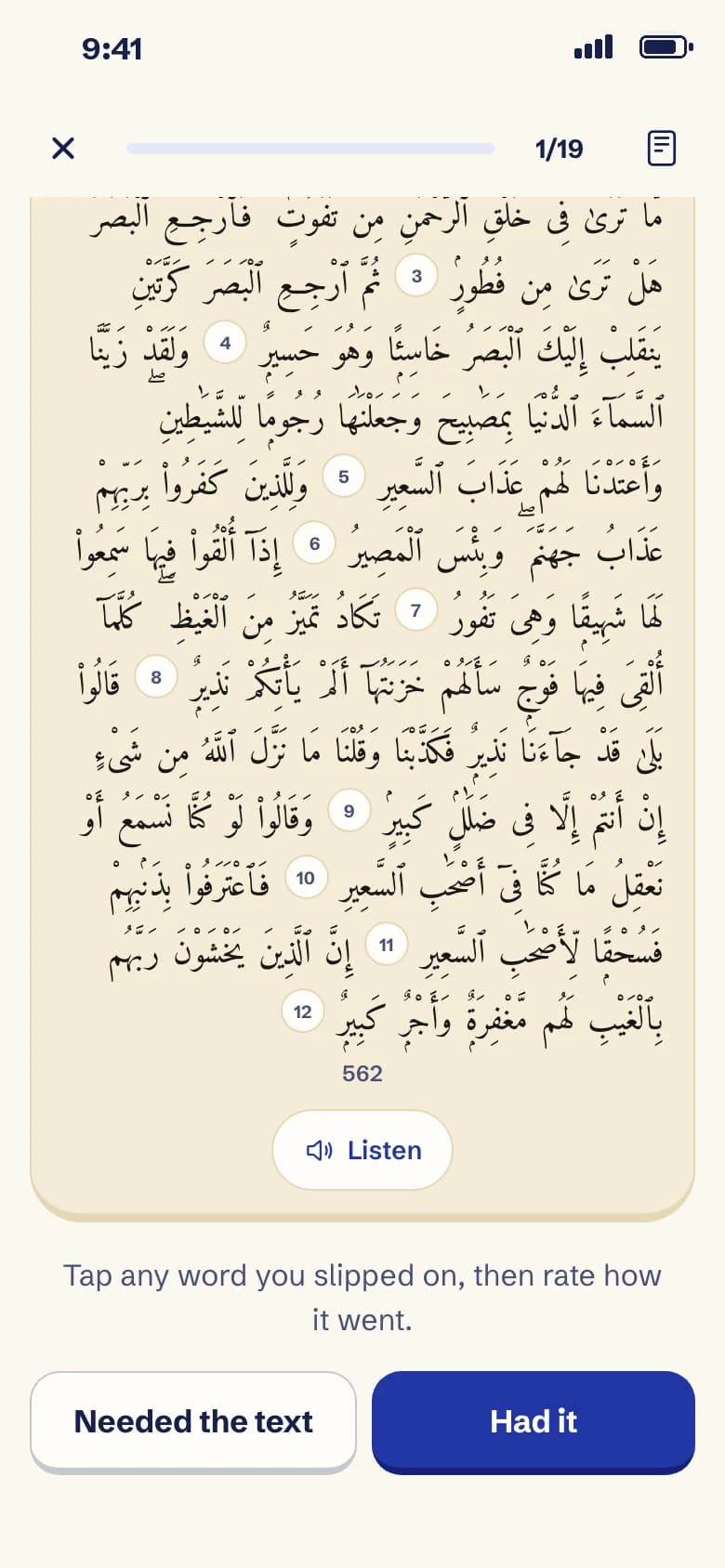
Reveal it
Check yourself against the mushaf text. Tap any word you slipped on.
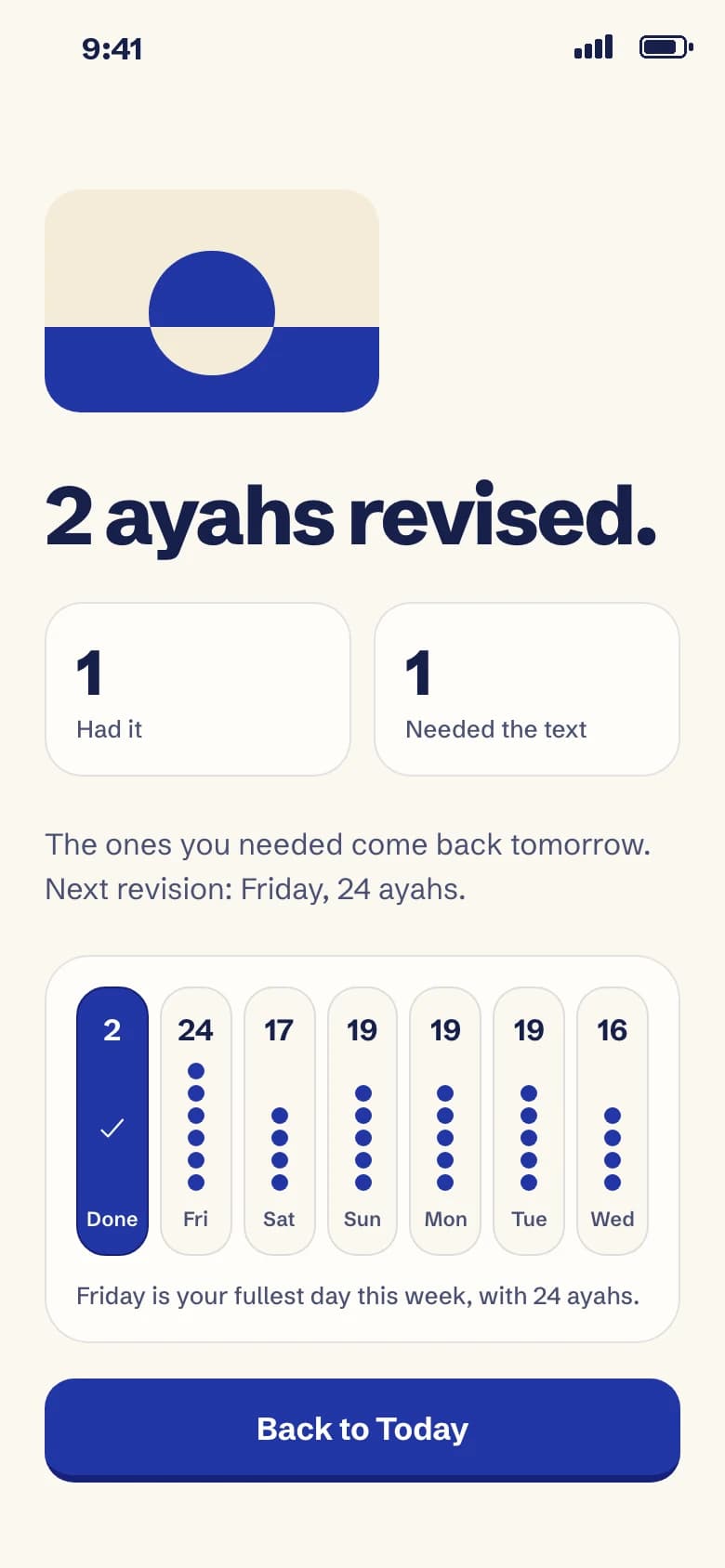
Rate it honestly
Ayahs you needed come back tomorrow. Firm ones wait longer. The week ahead stays even.
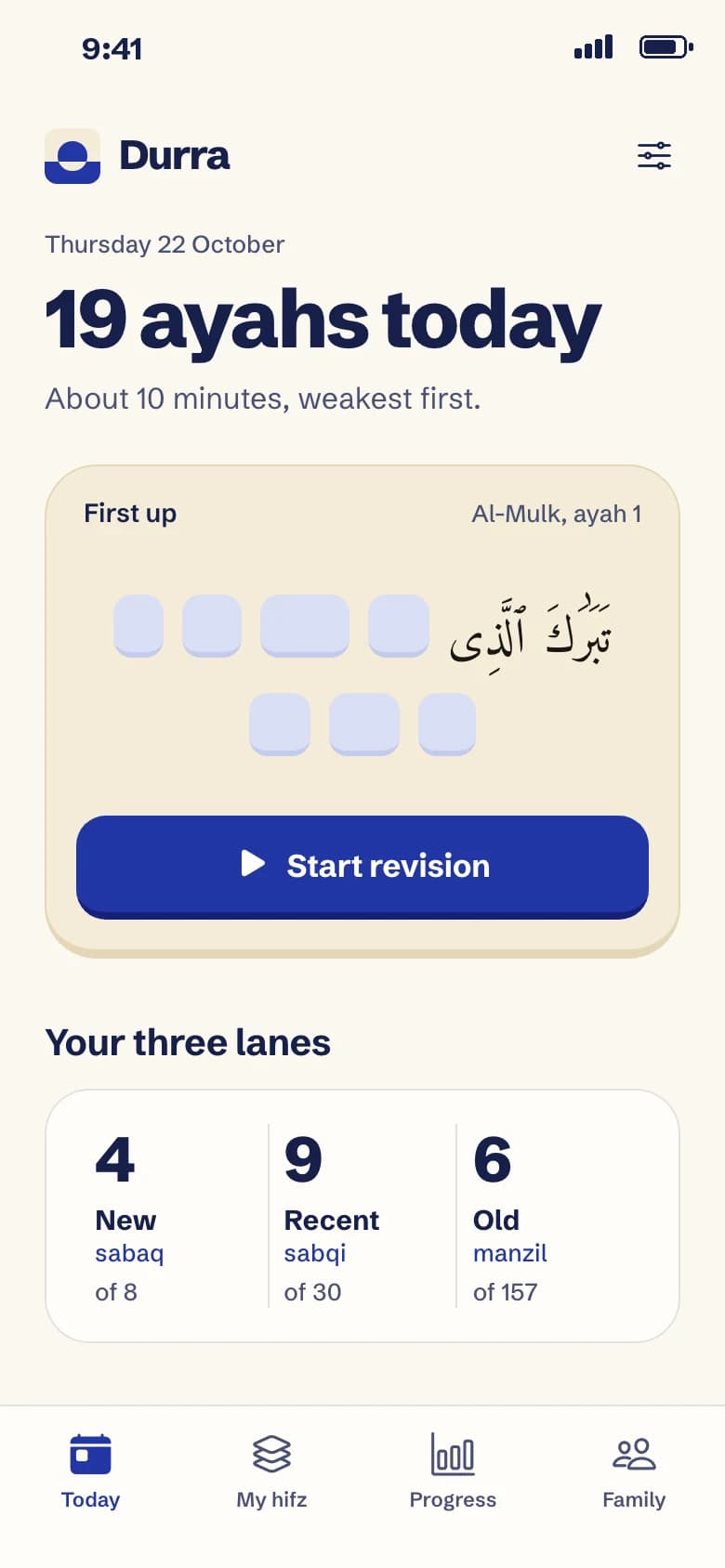
New, recent and old. The way huffaz already revise.
Durra keeps your three lanes apart, starts each day with the weakest ayahs, caps the day so nothing piles up, and shows you the week ahead.
- Newsabaq
- What you memorised this week. It comes back often until it settles.
- Recentsabqi
- The last few weeks of hifz, still settling in. Revised every few days.
- Oldmanzil
- Everything you have held for three weeks or more, turning over in a steady cycle.
The page you learned on.
Huffaz remember where an ayah sits on its page. Durra shows each ayah on its IndoPak page, with the ayahs around it, and veils only the one you are revising.
Prefer it bigger? Switch to one ayah at a time, at the size you choose.
Page 562Al-Mulk, ayahs 1 to 12
المُلۡكِ
بِسْمِ ٱللَّهِ ٱلرَّحْمَٰنِ ٱلرَّحِيمِ
تَبَٰرَكَٱلَّذِىبِيَدِهِٱلْمُلْكُوَهُوَعَلَىٰكُلِّشَىْءٍۢقَدِيرٌ1 ٱلَّذِىخَلَقَ2 ٱلَّذِىخَلَقَسَبْعَسَمَٰوَٰتٍۢطِبَاقًۭا ۖمَّاتَرَىٰفِىخَلْقِٱلرَّحْمَٰنِمِنتَفَٰوُتٍۢ ۖفَٱرْجِعِٱلْبَصَرَهَلْتَرَىٰمِنفُطُورٍۢ3 ثُمَّٱرْجِعِٱلْبَصَرَكَرَّتَيْنِيَنقَلِبْإِلَيْكَٱلْبَصَرُخَاسِئًۭاوَهُوَحَسِيرٌۭ4 وَلَقَدْزَيَّنَّاٱلسَّمَآءَٱلدُّنْيَابِمَصَٰبِيحَوَجَعَلْنَٰهَارُجُومًۭالِّلشَّيَٰطِينِ ۖوَأَعْتَدْنَالَهُمْعَذَابَٱلسَّعِيرِ5 وَلِلَّذِينَكَفَرُوا۟بِرَبِّهِمْعَذَابُجَهَنَّمَ ۖوَبِئْسَٱلْمَصِيرُ6 إِذَآأُلْقُوا۟فِيهَاسَمِعُوا۟لَهَاشَهِيقًۭاوَهِىَتَفُورُ7 تَكَادُتَمَيَّزُمِنَٱلْغَيْظِ ۖكُلَّمَآأُلْقِىَفِيهَافَوْجٌۭسَأَلَهُمْخَزَنَتُهَآأَلَمْيَأْتِكُمْنَذِيرٌۭ8 قَالُوا۟بَلَىٰقَدْجَآءَنَانَذِيرٌۭفَكَذَّبْنَاوَقُلْنَامَانَزَّلَٱللَّهُمِنشَىْءٍإِنْأَنتُمْإِلَّافِىضَلَٰلٍۢكَبِيرٍۢ9 وَقَالُوا۟لَوْكُنَّانَسْمَعُأَوْنَعْقِلُمَاكُنَّافِىٓأَصْحَٰبِٱلسَّعِيرِ10 فَٱعْتَرَفُوا۟بِذَنۢبِهِمْفَسُحْقًۭالِّأَصْحَٰبِٱلسَّعِيرِ11 إِنَّٱلَّذِينَيَخْشَوْنَرَبَّهُمبِٱلْغَيْبِلَهُممَّغْفِرَةٌۭوَأَجْرٌۭكَبِيرٌۭ12
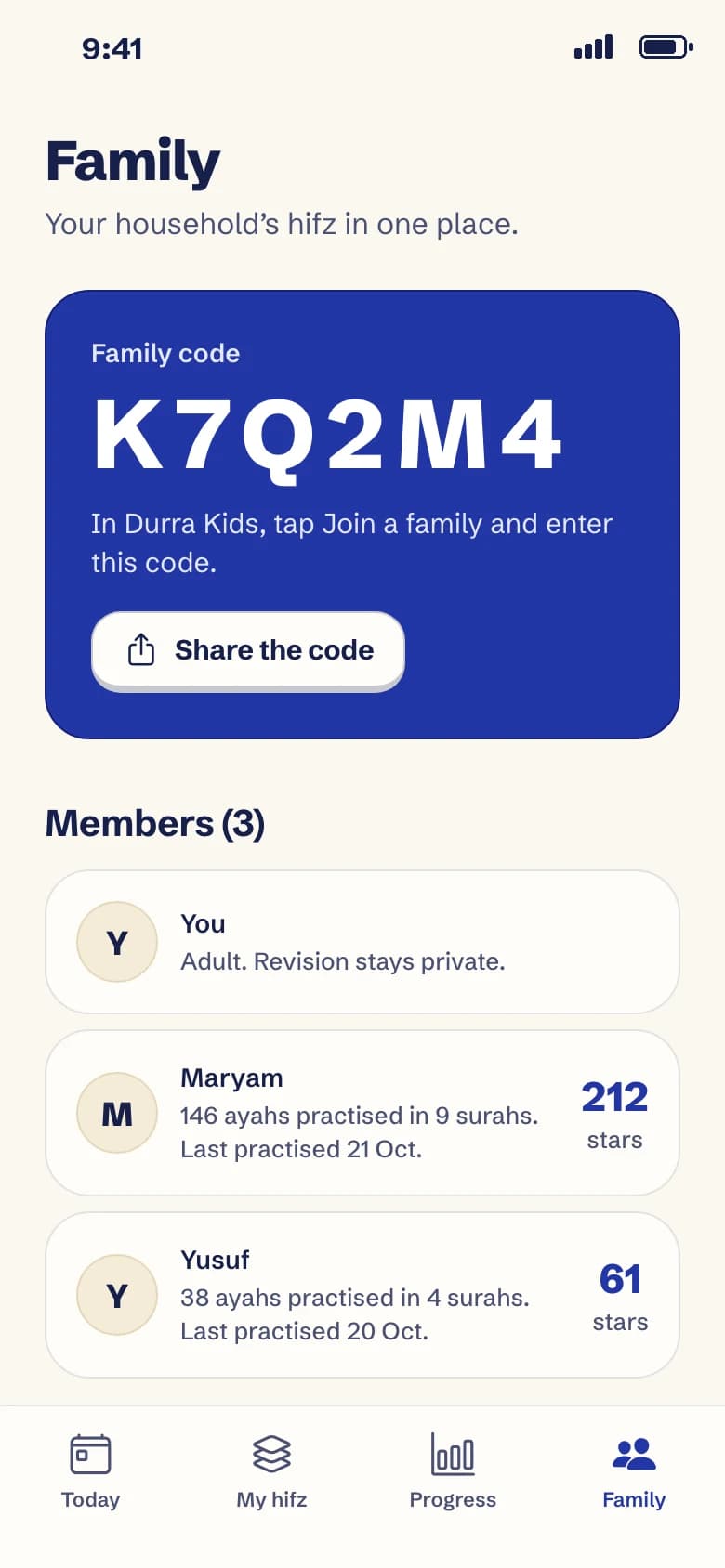
Hifz lives in households.
Create a family in Durra and share its code. Your children join from Durra Kids, and their practice appears beside your own revision. Your own revision stays private.
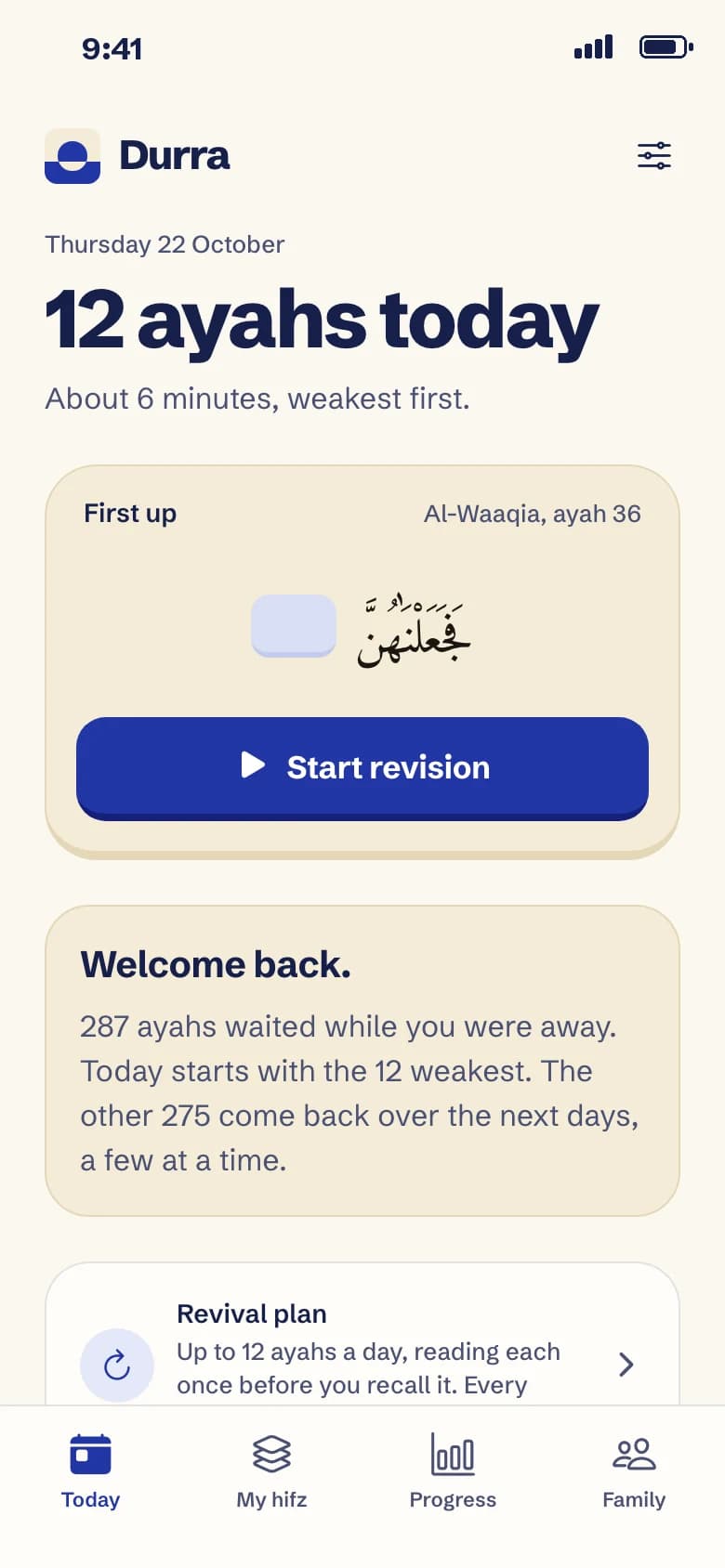
Bring back what you memorised years ago.
Tell Durra you memorised before. It starts small, lets you read each ayah once before you recall it, and brings back the weakest first. No wall of overdue work. Every ayah you bring back counts.
What Durra promises
No ads. Never sold.
Nothing on the screen but your revision. Your hifz record is not shared or sold.
Works offline
After the first download, revise on the train, at work or in the masjid without a signal.
Verified Quran text
Every ayah comes unchanged from the Tanzil Project’s Uthmani text and is checked on every release.
Beside your teacher
You rate your own recall. It is not tajweed grading, and it never replaces your teacher.
Today’s ayahs are waiting.
Start with what you already hold. Your first revision takes under a minute.
Download on the App Store